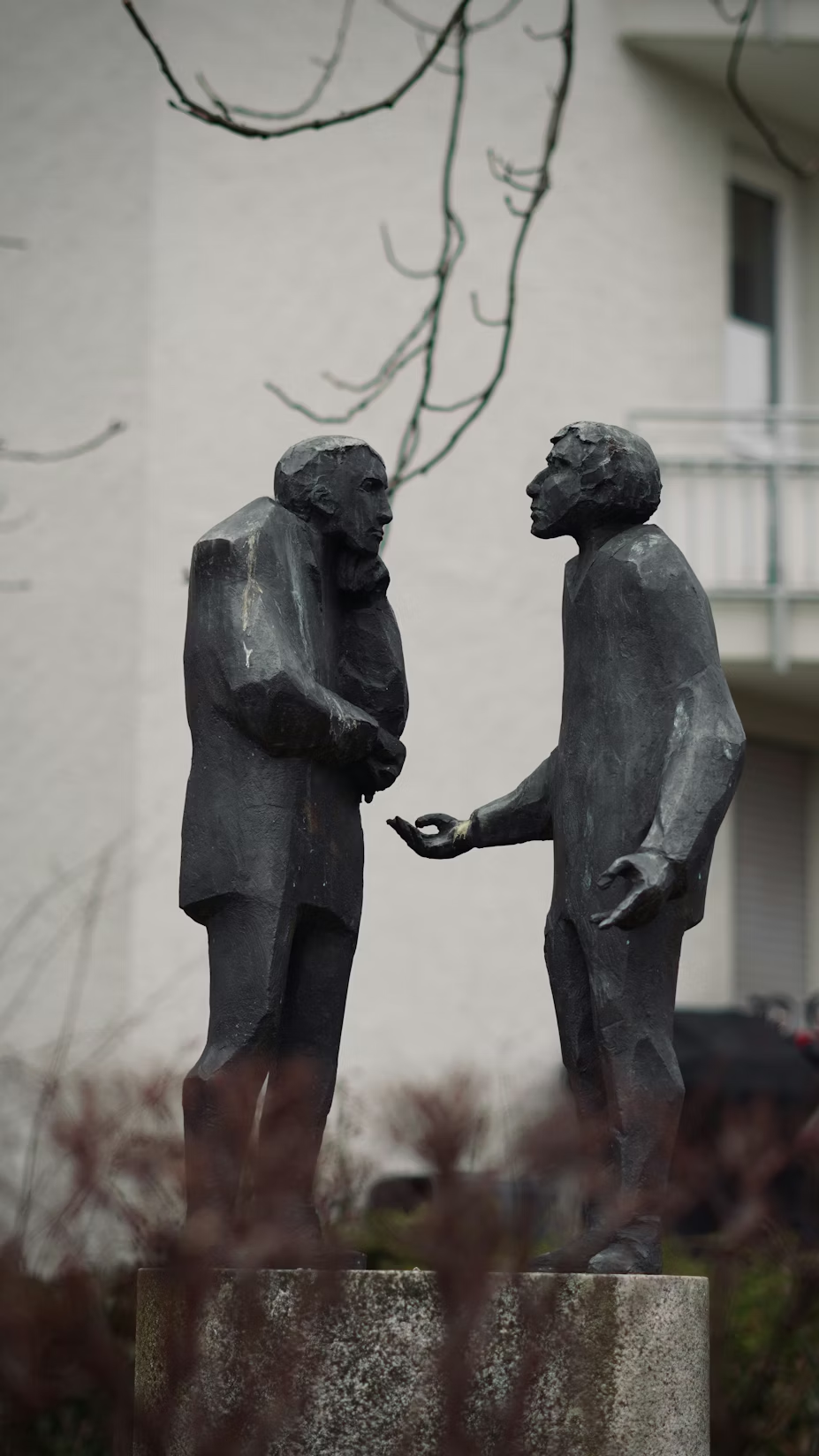
A Visitor’s Guide to the Museum of Human Intelligence
(21) The Atrophied Self: How the Self Is Not an Ineradicable Feature of the Cosmos but There Might Be Ways of Keeping It Going. By Charlie Clark
Broadening our conception of intelligence beyond the cognitive will help us restore a fuller understanding of our natural intelligence and reclaim manifestations thereof that have been too widely dismissed. By Joe Vukov
The serpent’s corrupting our posture as knowers hollows out our intelligence and through it, ourselves—three apprenticeships can restore right knowing. By Brandon McNeice
What if resisting transhumanism looks less like rejecting technologies and more like loving our neighbor as ourselves? By Joshua Rio-Ross
Recapturing a sense of delight in thinking and learning together promises to transform our workplaces into environments that foster our intellectual curiosity. By Elle Muller
Rather than an individual gifting, intelligence is properly understood as social—honed in community, where a ground of minds can be more than the sum of its parts. By Evan Tao
A tour through four American communal music traditions illuminates the ways these ancient practices form us for living in the world and in community. By Brandon McNeice
The arc of the Midwest indie project Bon Iver, now potentially complete, is long and winding but finds its clearest expression in Christ. By Will Bryant
Christianity teaches that followers of Christ become members of God’s family, a relationship that transforms in turn our relationship to the world—and to the work we do every day. By R. J. Snell
What if in fixating on the risk technology poses to our faith, we risk overlooking its potential to strengthen our faith? By Allison MacLeod
The ritual of the church’s liturgy is not just the means to the end of optimizing spiritual experience; it is itself the God-glorifying end of worship. By Collin Slowey
Worshipping alongside communities of nuns offers a reprieve from devotional practices weighed down by obligation, and invites a new perspective on the Church as the bride of Christ. By Elizabeth Hansen